All sectors
Cyber Essentials for public sector contracts: when and how to certify
When UK public sector tenders need Cyber Essentials or Plus, what it costs, what changed in April 2026 and how to pass the assessment first time.
By OneTender team9 min read

In short
- Central government departments, their agencies and NDPBs, and NHS bodies must require Cyber Essentials, or equivalent controls, on higher-risk contracts, such as those handling personal data (PPN 014).
- Basic Cyber Essentials is a verified self-assessment costing £320 plus VAT for up to 9 staff. Cyber Essentials Plus adds a technical audit and is priced by quote.
- Certificates expire after 12 months, and PPN 014 says you must renew every year for the life of the contract.
- Assessments bought from 27 April 2026 use requirements v3.3 and the Danzell question set. Version 3.3 states outright that cloud services can't be left out of scope.
- Unsupported software in scope is an automatic fail. Check it, multi-factor authentication on cloud accounts and 14-day patching before you pay.
If a central government department, one of its agencies or non-departmental public bodies, or an NHS body is buying, and the contract involves handling personal data or OFFICIAL information, expect to need Cyber Essentials or verified equivalent controls: PPN 014 (opens in a new tab) requires them for higher-risk contracts like these. Councils and other buyers ask for it more and more too. Basic certification is a self-assessment marked by an independent assessor, costs £320 plus VAT for an organisation of up to 9 staff and lasts 12 months. Cyber Essentials Plus adds a technical audit and is priced by quote.
When a tender requires Cyber Essentials
PPN 014 applies to central government departments, their executive agencies and non-departmental public bodies, and NHS bodies (paragraph 3). Other public bodies may choose to follow it (paragraph 6), and IASME (opens in a new tab), the NCSC's delivery partner for the scheme, says it is required in an increasing number of local government contracts. In-scope buyers must make suppliers meet technical requirements when a contract has any of these characteristics (paragraph 12):
- You'll handle citizens' personal information, such as home addresses, bank details or payment information.
- You'll handle personal information about government employees, ministers or special advisers, such as payroll, travel booking or expenses.
- You'll supply ICT systems or services designed to store or process data at the OFFICIAL level of the Government Security Classifications Policy.
- The contract deals with information about the day-to-day business of government, service delivery or public finances, among other areas the note lists.
PPN 014 calls Cyber Essentials or Cyber Essentials Plus the quickest and most effective way to manage those risks, and says the certificate must be renewed every year for the life of the contract (paragraph 14). It doesn't make Plus the default: Annex B describes Plus as the more rigorous assessment, for contracts with a higher risk of cyber threats. Buyers must not take a blanket approach, and should avoid deterring small suppliers from bidding (paragraphs 20 and 21).
- Timing. Annex C says evidence is required before contract award, and paragraph 16 says it is essential at the point when data is passed to you. The requirement must be in the tender notice (Annex C, Q3). The Cabinet Office's technical specifications guidance (opens in a new tab) lets a buyer accept self-certification during the tender and check the standard before award (paragraph 22), so if you're mid-assessment, ask.
- Equivalents. Without the certificate, you must be able to show equivalent controls by other means (paragraph 15). Annex C (Q10) says buyers must accept equivalents under section 56 of the Procurement Act, normally verified by a technically competent, independent third party, and always so for a Plus-level requirement.
- ISO 27001 isn't a shortcut. Its scope rarely includes all five Cyber Essentials controls, so Annex C (Q9) expects most ISO 27001 holders to need Cyber Essentials as well, or to show equivalent controls.
- Scope. By default a certificate covers the legal entity supplying the contract, and you can narrow it to part of that entity, so buyers are told to check what yours covers (Annex C, Q8).
Defence work runs differently. Under the MOD's Cyber Security Model (opens in a new tab), the buyer sets a Cyber Risk Profile from Level 0 to Level 3, usually stated in the invitation to tender. You self-assess against it in a Supplier Assurance Questionnaire, and submit a Cyber Improvement Plan if you fall short. The Defence Cyber Certification, with IASME as its certification authority, is a way to evidence compliance independently.
Cyber Essentials or Cyber Essentials Plus?
Both cover the same five technical controls. The difference is how they're checked and what they cost (NCSC (opens in a new tab), IASME FAQ (opens in a new tab)).
| Question | Cyber Essentials | Cyber Essentials Plus |
|---|---|---|
| How it's assessed | A verified self-assessment: you answer the question set online, a board member signs a declaration that the answers are true, and an assessor marks them. No vulnerability scan | The same self-assessment plus a technical audit: internal and external vulnerability scans, then tests on a random sample (typically around 10 per cent) of your user devices, internet gateways and servers open to the internet |
| Who assesses | An assessor at a certification body licensed by IASME, whether you apply yourself through IASME or pay a certification body to support you | A certification body you contact directly. Audits can be remote or in person |
| Cost | IASME's fixed fee by number of staff, from £320 plus VAT | Quoted on the size and complexity of your network. IASME's form gets you quotes from three certification bodies |
| When buyers ask for it | The baseline PPN 014 describes, with a basic level of assurance (paragraph 22) | Contracts with a higher risk of cyber threats (PPN 014, Annex B) |
| Order | Comes first: the verified self-assessment is a prerequisite for Plus | If your basic certificate is less than 3 months old, you don't repeat the self-assessment questions |
Plus builds on the basic certificate rather than replacing it (IASME (opens in a new tab)). Since PPN 014 asks buyers to keep requirements proportionate and not deter small suppliers, a clarification question is fair if a low-risk contract asks for Plus.
What changed in April 2026
Version 3.3 of the NCSC's Requirements for IT Infrastructure (opens in a new tab) took effect on 27 April 2026, and IASME's matching question set is called Danzell. If you bought your assessment before that date, you can follow version 3.2 and the Willow question set instead (NCSC resources (opens in a new tab), IASME (opens in a new tab)). The NCSC's list of what's new:
- Cloud services can't be excluded from scope. If your data or services are hosted in cloud services, such as Microsoft 365 or Google Workspace, they must be in scope, and v3.3 now says so outright.
- A definition of cloud services: an on-demand, scalable service on shared infrastructure, reached over the internet through an account, that stores or processes your data.
- Passwordless sign-in. The definition now includes FIDO2 authenticators, which v3.3 treats as passkeys and as multi-factor authentication.
- Backups. Backing up still isn't a technical requirement, but v3.3 stresses its importance and highly recommends it.
- Smaller changes. The scope criteria no longer mention untrusted connections, and the software development section now points to the Software Security Code of Practice.
Two rules didn't change, and they still trip people up: authentication to cloud services must always use multi-factor authentication, and high or critical risk updates must go on within 14 days of release. Both were already in version 3.2 (opens in a new tab).
The five controls in plain English
Every requirement sits under one of five controls. Here is what each means for a 10-person firm, from version 3.3:
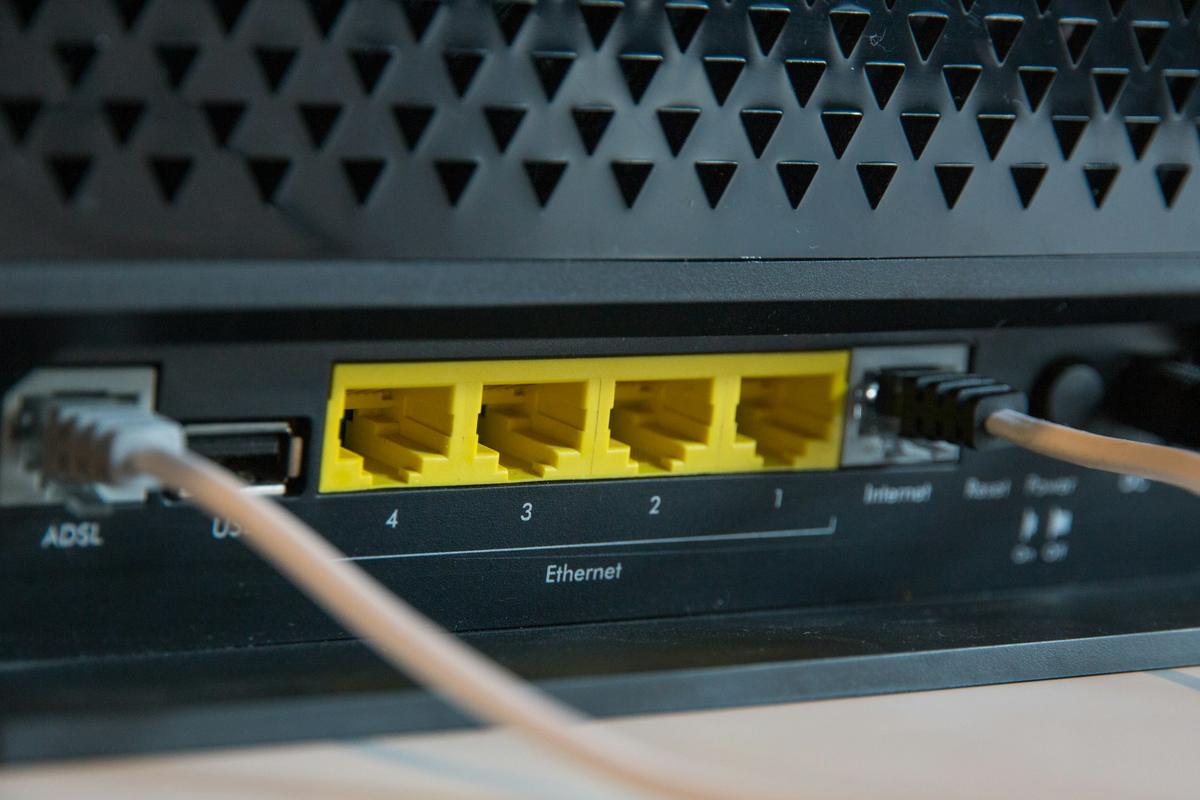
- Firewalls. Every device in scope sits behind a correctly configured firewall: your office router, plus the software firewall built into each laptop for home and public wifi. Change default admin passwords, block unauthenticated inbound connections, and get any inbound rule you open approved and documented.
- Secure configuration. Remove accounts and software you don't use, change default passwords, turn off auto-run, and lock devices with a PIN or password of at least 6 characters, or a fingerprint. Where you can set it, lock the device after no more than 10 wrong attempts, or slow retries to no more than 10 guesses in 5 minutes.
- Security update management. Use only licensed, supported software, switch on automatic updates and install high or critical risk fixes, and any update whose severity the vendor doesn't state, within 14 days. When a vendor stops supporting something, remove it, or cut it off from the internet in a separate sub-set.
- User access control. Give everyone their own account, remove leavers promptly, use multi-factor authentication wherever it's available and always on cloud services, and keep admin accounts for admin work only, never email or web browsing.
- Malware protection. On Windows and Mac computers, run anti-malware software that stays up to date and blocks malicious websites. On any device, you can instead allow only approved, code-signed applications to run.
How to certify, step by step
- Decide your scope. The whole organisation gives the best protection, and you need it for the free insurance. A partial scope must be a separately managed sub-set that you justify to the assessor, and it can't leave out end-user devices or cloud services.
- Run the free Readiness Tool (opens in a new tab). It walks through the requirements and gives you a tailored action plan. Finishing it doesn't mean you'll pass.
- Preview the question set. IASME lets you download the Danzell questions (opens in a new tab) as a PDF or spreadsheet, so you can draft answers before you pay.
- Fix the gaps. Work through the requirements control by control. The NCSC (opens in a new tab) offers small and medium-sized firms a free 30-minute consultation with an NCSC-assured Cyber Advisor, and its small organisations guide (opens in a new tab) covers the basics.
- Buy the assessment. Apply yourself through IASME (opens in a new tab), or pay a certification body (opens in a new tab) to help you through it.
- Submit within 6 months. You have 6 months from applying, after which your account may be closed and you'd pay again. A board member signs the declaration.
- Get your result. Most assessors aim to mark within 3 days. If you fail, you get 2 working days to fix simple issues and resubmit at no extra charge.
- Check your listing. IASME's certificate search (opens in a new tab) shows certificates issued in the last 12 months, and buyers can use it to check yours.
- For Plus, book the audit. Get quotes from certification bodies, and aim to certify to Plus within 3 months of your basic certificate so you don't repeat the questions.
- Diary the renewal. Certificates expire after 12 months, and IASME emails a reminder about a month before. You answer every question again each year, so keep a copy of this year's answers.
Costs, timings and the free insurance
IASME sets the basic fee by headcount, using the government's size bands (IASME FAQ (opens in a new tab)). Plus is quoted separately.
| Organisation | Staff | Fee |
|---|---|---|
| Micro | 0 to 9 | £320 plus VAT |
| Small | 10 to 49 | £440 plus VAT |
| Medium | 50 to 249 | £500 plus VAT |
| Large | 250 or more | £600 plus VAT |
| Cyber Essentials Plus | Any size | Quoted by a certification body |
Time depends mostly on how ready you are. IASME says a prepared self-assessment might take about an hour to fill in, most assessors aim to return results within 3 days, and you have 6 months from applying to finish. Plus adds the audit, which you arrange with a certification body.
Free cyber insurance comes with basic certification if you are domiciled in the UK or Crown Dependencies, your turnover is under £20 million, you certify the whole organisation and you opt in (IASME (opens in a new tab)). The limit is £25,000, with a 24-hour incident helpline and a £1,000 excess, and it doesn't cover money stolen by cyber fraud. IASME says that limit will be inadequate for a serious incident or more than one, so ask your broker whether you need more.
How to pass first time
Before you apply
- Scope agreed: whole organisation, including laptops, phones and cloud services
- No unsupported operating systems or apps on any device in scope
- Multi-factor authentication switched on for every cloud service account
- Automatic updates on, and high or critical fixes applied within 14 days
- Separate admin accounts, never used for email or web browsing
- Default passwords changed on routers, firewalls and every device
- Danzell questions answered in draft, with a board member ready to sign
- Renewal reminder set for a month before the certificate's 12 months run out
Where OneTender fits
OneTender spots a Cyber Essentials requirement in a tender and checks your company profile and document library for the certificate. It treats Cyber Essentials Plus as covering basic Cyber Essentials, and flags a certificate that has expired or expires within 30 days, so you can recertify in time. It drafts your cyber security answers from your own policies, and you approve them before anything is submitted. It doesn't certify you: the controls, the assessment and the certificate are still yours.
Sources
- PPN 014: Cyber Essentials scheme (Cabinet Office, full text) (opens in a new tab) gov.uk
- PPN 014: Cyber Essentials scheme, GOV.UK publication page (opens in a new tab) gov.uk
- Cabinet Office: guidance on technical specifications (Procurement Act 2023) (opens in a new tab) gov.uk
- MOD: Cyber Security Model (opens in a new tab) gov.uk
- NCSC: Cyber Essentials overview (opens in a new tab) ncsc.gov.uk
- NCSC: Cyber Essentials help and resources (opens in a new tab) ncsc.gov.uk
- NCSC: Cyber Essentials Requirements for IT Infrastructure v3.3 (April 2026) (opens in a new tab) ncsc.gov.uk
- NCSC: Cyber Essentials Requirements for IT Infrastructure v3.2 (April 2025) (opens in a new tab) ncsc.gov.uk
- NCSC: small organisations guide to cyber security (opens in a new tab) ncsc.gov.uk
- IASME: Cyber Essentials (opens in a new tab) iasme.co.uk
- IASME: Cyber Essentials frequently asked questions (opens in a new tab) iasme.co.uk
- IASME: cyber liability insurance with Cyber Essentials (opens in a new tab) iasme.co.uk
- IASME: find a certification body (opens in a new tab) iasme.co.uk
- IASME: Cyber Essentials certificate search (opens in a new tab) iasme.co.uk
- IASME: preview the self-assessment questions (opens in a new tab) iasme.co.uk
- IASME: Cyber Essentials Readiness Tool (opens in a new tab) getreadyforcyberessentials.iasme.co.uk
This guide is general information, not legal advice. Check the buyer's documents and the official guidance for your procurement.